Standby Generator Installation Process in Palm Beach, FL
Understanding the Standby Generator Installation Process
If you're planning a standby generator installation in Palm Beach, you may be researching the installation process to better understand what to expect before moving forward.
Whether you're considering your first backup power system, upgrading an existing generator, or comparing fuel and equipment options, understanding the key steps involved can help you make a more informed decision.
This guide explains how standby generator installations typically work, how local conditions throughout Palm Beach County may affect the project, and what factors homeowners should consider before getting started.
What Is the Standby Generator Installation Process?
The standby generator installation process involves evaluating a property's power requirements, selecting the appropriate equipment, preparing the installation site, connecting the generator to the home's electrical system, and ensuring compliance with local regulations.
Unlike portable generators, standby systems are permanently installed and designed to automatically provide backup power when utility service is interrupted.
The process typically includes:
- Electrical load assessment
- Generator sizing
- Fuel source evaluation
- Site planning and placement
- Permit approvals
- Equipment installation
- Testing and final inspection
Standby generators are commonly used in:
- Primary residences
- Luxury waterfront properties
- Larger custom homes
- Homes with medical equipment
- Properties requiring uninterrupted power
Many Palm Beach homeowners choose standby generators to protect against hurricane-related outages, maintain comfort during severe weather, and safeguard critical home systems.
Benefits of Understanding the Installation Process
Depending on your property and goals, understanding the installation process can provide several advantages:
Better project planning
Greater long-term reliability
More accurate budgeting
Fewer unexpected installation issues
Improved system selection
Increased confidence when comparing options
Not every installation follows the exact same path, but understanding the process helps homeowners make informed decisions and set realistic expectations.
Important Factors to Consider
Before moving forward with a standby generator installation, property owners should evaluate several key factors.
Property Conditions
Generator location, utility access, electrical infrastructure, available space, and site layout can all influence installation requirements.
Budget
Costs vary depending on generator size, fuel source, site preparation needs, permitting requirements, and installation complexity.
Maintenance Requirements
Different generator systems require varying levels of routine maintenance, inspections, and long-term service.
Longevity
Most professionally installed standby generators provide many years of reliable service when properly maintained and operated.
Backup Power Goals
Some homeowners only want to power essential systems, while others prefer complete whole-home coverage during outages.
How Local Conditions in Palm Beach May Affect the Project
Generator installations in Palm Beach often require consideration for local factors such as:
- Hurricane season and storm-related outages
- Heavy seasonal rainfall and drainage concerns
- Coastal humidity and salt-air exposure
- Flood-prone or waterfront property conditions
- Local permitting, zoning, and inspection requirements
Understanding these conditions can help ensure the system is properly planned, appropriately sized, and installed for long-term performance.
Available Options and Variations
Depending on the property, homeowners may have several generator options available.
Examples include:
Whole-home standby generators
Essential-circuit backup systems
Natural gas generator systems
Propane-powered generator systems
Each option offers different advantages related to cost, fuel availability, maintenance requirements, power capacity, and long-term performance.
Comparing Common Generator Choices
| Feature | Whole-Home Generator | Natural Gas Generator | Propane Generator |
|---|---|---|---|
| Initial Cost | Medium-High | Medium | Medium-High |
| Durability | High | High | High |
| Maintenance | Medium | Low | Medium |
| Convenience | High | High | Medium |
| Fuel Availability | Utility Dependent | Continuous Supply | Tank Dependent |
| Best For | Full Home Protection | Homes with Gas Service | Homes Without Gas Service |
Comparing available options side-by-side can help identify which solution best aligns with your goals and budget.
What to Expect During a Typical Installation Project
While every property is unique, the installation process often includes the following stages:
01
Planning & Consultation
Discuss backup power goals, outage concerns, electrical demand, and preferred system options.
02
Site Evaluation
Review electrical infrastructure, generator location, fuel source availability, drainage considerations, and property access requirements.
03
Equipment Selection & System Design
Choose the most appropriate generator size and fuel source based on household power requirements and long-term objectives.
04
Installation
Install the generator, transfer switch, fuel connections, electrical components, and supporting infrastructure using industry-standard methods.
05
Final Testing & Inspection
Inspect the completed installation, verify system operation, and confirm compliance with local permitting and inspection requirements.
Cost Considerations for the Installation Process
Installation costs can vary depending on:
Generator size
Utility connections
Fuel source selection
Electrical upgrades
Site preparation requirements
Local permitting and inspection requirements
For a detailed pricing breakdown, see:
Is the Standby Generator Installation Right for Your Property?
A professionally installed standby generator may be worth considering if you want to:
Protect your property during outages
Improve long-term reliability
Reduce disruption during storms
Safeguard appliances and HVAC systems
Increase property value
Enhance hurricane preparedness
A professional consultation can help determine whether a standby generator system aligns with your goals, property requirements, and budget.
Related Resources
Continue researching your project:

Learn about available standby generator options, fuel sources, system sizes, and installation considerations for homes throughout Palm Beach County.
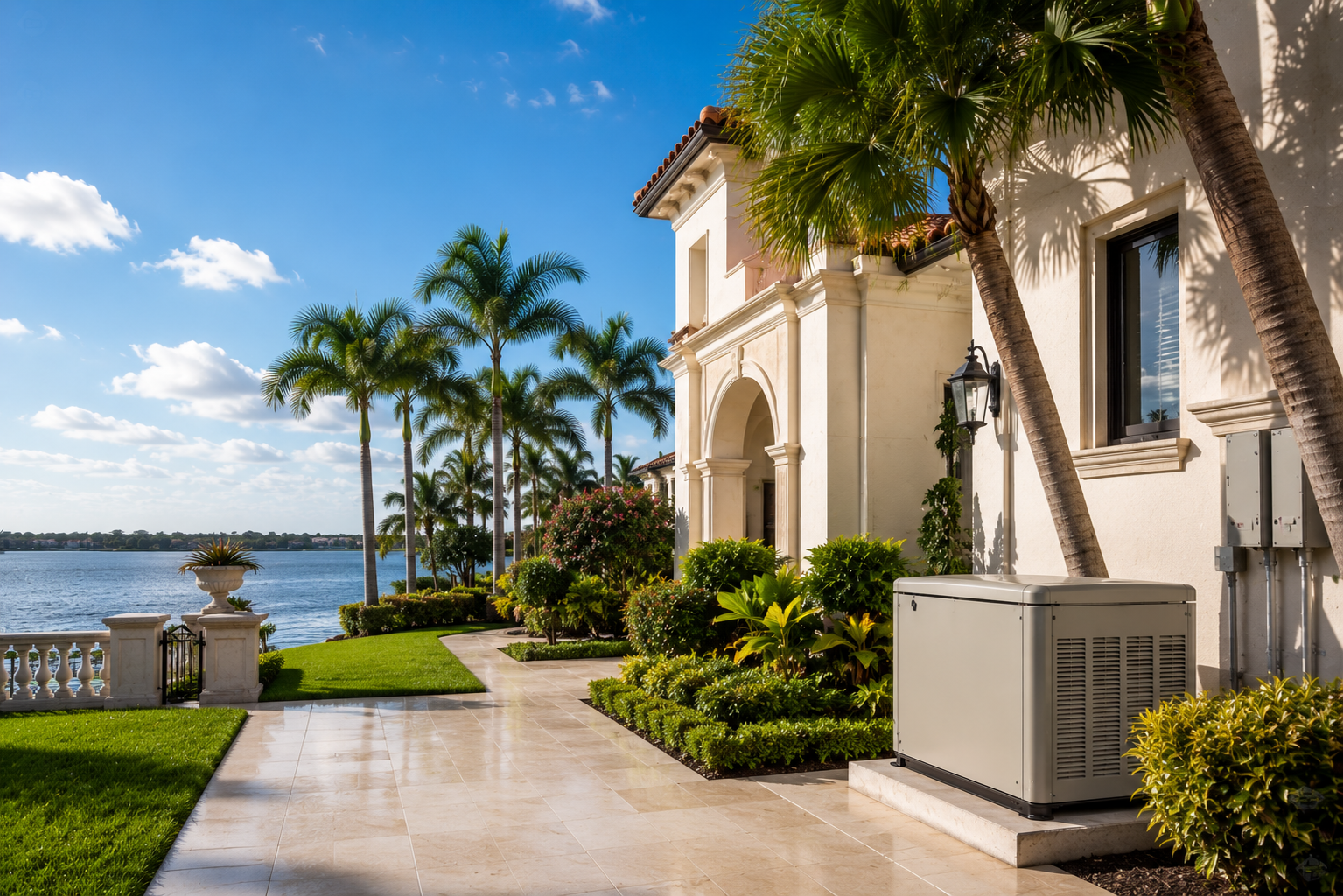
Generator installation costs can vary based on equipment size, fuel source, electrical requirements, and permitting considerations. Explore typical pricing ranges and factors that influence project costs.
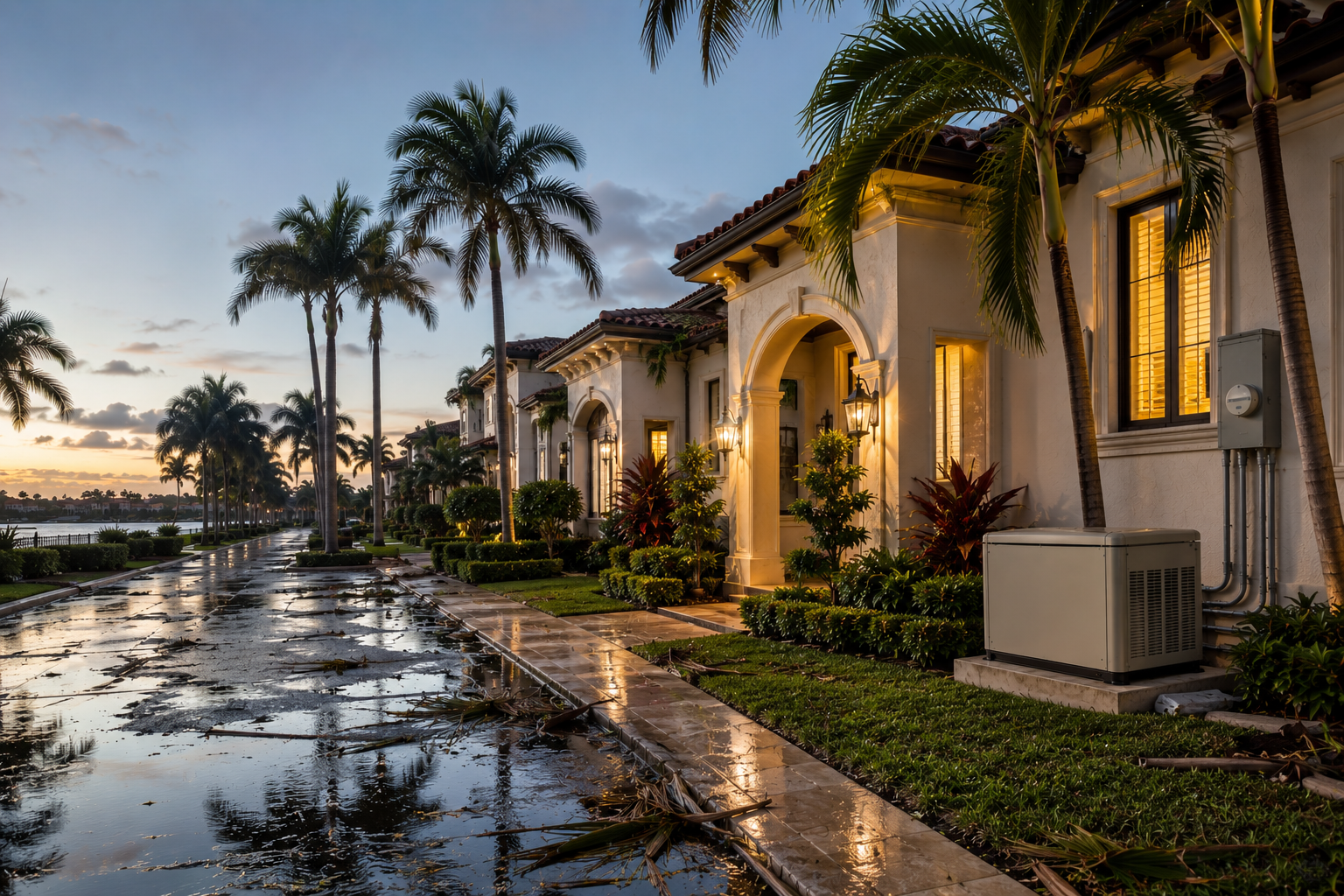
Hurricanes, tropical storms, and utility interruptions can impact homes throughout Palm Beach County. Discover how emergency power solutions help homeowners maintain comfort, security, and access to essential systems during outages.

Compare standby generators and portable generators to better understand the differences in convenience, reliability, maintenance requirements, and long-term value.
Request a Free Estimate
If you're considering standby generator installation in Palm Beach, requesting an estimate can help you better understand your options and expected costs.
Providing details about your property's electrical requirements, fuel availability, and backup power goals helps ensure a more accurate consultation and recommendation.
Call now or submit a request to get started.
Fill out the form
Request an Estimate
We will get back to you as soon as possible.
Please try again later.
Frequently Asked Questions
How do I know if a standby generator is right for my property?
Your backup power goals, electrical demand, fuel availability, budget, and property layout all play a role in determining whether a standby generator is the right solution.
How long does a typical installation project take?
Most installations require time for planning, permitting, equipment delivery, installation, inspections, and final testing. Timelines vary depending on project complexity and local requirements.
What factors affect overall project cost?
Generator size, fuel source, electrical modifications, site preparation, permitting requirements, and installation complexity all influence pricing.
Can a standby generator improve property value?
Many homeowners consider standby generators a desirable home improvement that can increase convenience, reliability, and market appeal.
Should I compare multiple generator options before deciding?
Comparing fuel sources, generator sizes, coverage levels, and installation approaches is often one of the best ways to identify the solution that offers the right balance of cost, performance, and long-term value.