Professional Whole-Home Generator Installation Services
Professional Generator Installation for Reliable Whole-Home Backup Power
Planning a whole-home generator installation involves more than simply selecting equipment. Proper generator sizing, fuel source selection, electrical integration, equipment placement, permitting, and final system testing all play an important role in ensuring dependable backup power when utility outages occur.
Palm Beach County generator installations may need to account for hurricane exposure, heavy rainfall and drainage, coastal conditions, fuel availability, property layout, and local permitting requirements. Addressing these factors during planning can influence generator placement, system configuration, and long-term reliability.
We help connect Palm Beach County property owners with local generator professionals who can evaluate site conditions, electrical requirements, fuel options, and standby generator installation needs.
What This Service Can Help You Accomplish
Palm Beach County homeowners commonly use standby generator installation to:
Provide automatic backup power during outages
Protect critical home systems and appliances
Improve property resilience during hurricane season
Replace aging or unreliable backup power equipment
Increase property value and market appeal
Support new construction and major renovation projects
The right installation approach depends on the property's electrical demand, desired coverage, fuel availability, site conditions, and long-term backup-power goals.
Available Standby Generator Installation Options
Depending on the Palm Beach County property, electrical demand, and available fuel source, installation options may include:
Whole-home standby generator installation
Partial-home backup power systems
Natural gas generator systems
Propane-powered standby generators
Generator replacement and system upgrades
The best installation approach depends on required capacity, fuel availability, transfer-switch needs, property layout, maintenance considerations, and overall project scope.
05
How Professional Standby Generator Installation Is Planned
A standby generator installation in Palm Beach County typically follows a coordinated process covering load requirements, site placement, fuel and electrical connections, permitting, installation, and final testing.
Generator Project Planning & Load Goals
Review the property's electrical demand, desired backup coverage, generator goals, fuel options, and other requirements that may shape the installation.
Generator Placement & Site Evaluation
Evaluate generator placement, electrical and fuel connections, service access, drainage, setbacks, and other Palm Beach County site conditions that may affect the installation.
Generator Sizing & Equipment Selection
Develop recommendations based on:
- Property electrical demand
- Desired generator coverage
- Available fuel source
- Equipment placement and site conditions
- Palm Beach County code and permitting requirements
Standby Generator Installation
The standby generator, transfer equipment, electrical connections, and fuel components are installed according to the approved project requirements and site conditions.
Generator Testing & Final Project Review
The completed installation is reviewed, tested, and verified to ensure proper operation, safety, and overall project satisfaction.
How Palm Beach County Conditions Affect Standby Generator Installation
Standby generator installations in Palm Beach County need to account for local weather, site, and regulatory conditions such as:
Hurricane season and storm-related outages
Coastal humidity and salt-air exposure
Tropical weather patterns and high winds
Heavy rainfall and site drainage considerations
Local permitting, zoning, and inspection requirements
Accounting for storm exposure, drainage, humidity, placement restrictions, and local approval requirements early can help support reliable long-term generator operation.
Is Standby Generator Installation Right for Your Property?
Standby generator installation may be a practical fit for Palm Beach County properties where owners want to:
Protect their home during extended power outages
Maintain comfort during hurricane season
Safeguard appliances, HVAC systems, and electronics
Increase reliability and energy security
Improve property value and marketability
Reduce disruption during utility failures
A property-specific load and site review can help determine whether essential-load coverage or broader whole-home backup is the better fit.
Types of Standby Generator Installation Projects We Help Facilitate
Across Palm Beach County, standby generator projects commonly include:
Whole-home backup power installations
Generator replacement projects
Luxury waterfront property generator systems
New construction generator integration
Backup power upgrades for existing homes
Project scope should reflect electrical demand, fuel access, property layout, permitting requirements, and the level of automatic backup coverage the homeowner wants.
Cost Factors for Standby Generator Installation
Standby generator installation costs in Palm Beach County can vary based on:
Generator size and power output
Preparation and infrastructure needs
Fuel source selection
Permitting and inspection requirements
Electrical system requirements
Site accessibility
A property-specific estimate should account for generator capacity, electrical work, fuel connections, permitting, site preparation, placement, and access.
Benefits of Professional Standby Generator Installation
A professionally planned standby generator installation can provide Palm Beach County homeowners with:
- Reliable backup power during outages
- Increased property functionality and comfort
- Greater long-term system durability
- Enhanced property value
- Improved performance during severe weather
- Reduced risk of unexpected power interruptions
The greatest benefit comes from matching the generator and installation to the home's actual electrical loads, site conditions, and long-term backup-power requirements.
Standby Generator Installation Service Areas in Palm Beach County
Standby generator installation is available throughout Palm Beach County, including:
Explore service availability in your area:
- Home Standby Generator Installation Boca Raton
- Home Standby Generator Installation Boynton Beach
- Home Standby Generator Installation Delray Beach
- Home Standby Generator Installation Jupiter
- Home Standby Generator Installation Palm Beach Gardens
- Home Standby Generator Installation Wellington
- Home Standby Generator Installation West Palm Beach
Explore all standby generator service areas in Palm Beach County
Helpful Resources for Planning a Standby Generator Installation
Use these guides to compare installation costs, understand the project process, and evaluate backup-power options before planning a standby generator installation in Palm Beach County.
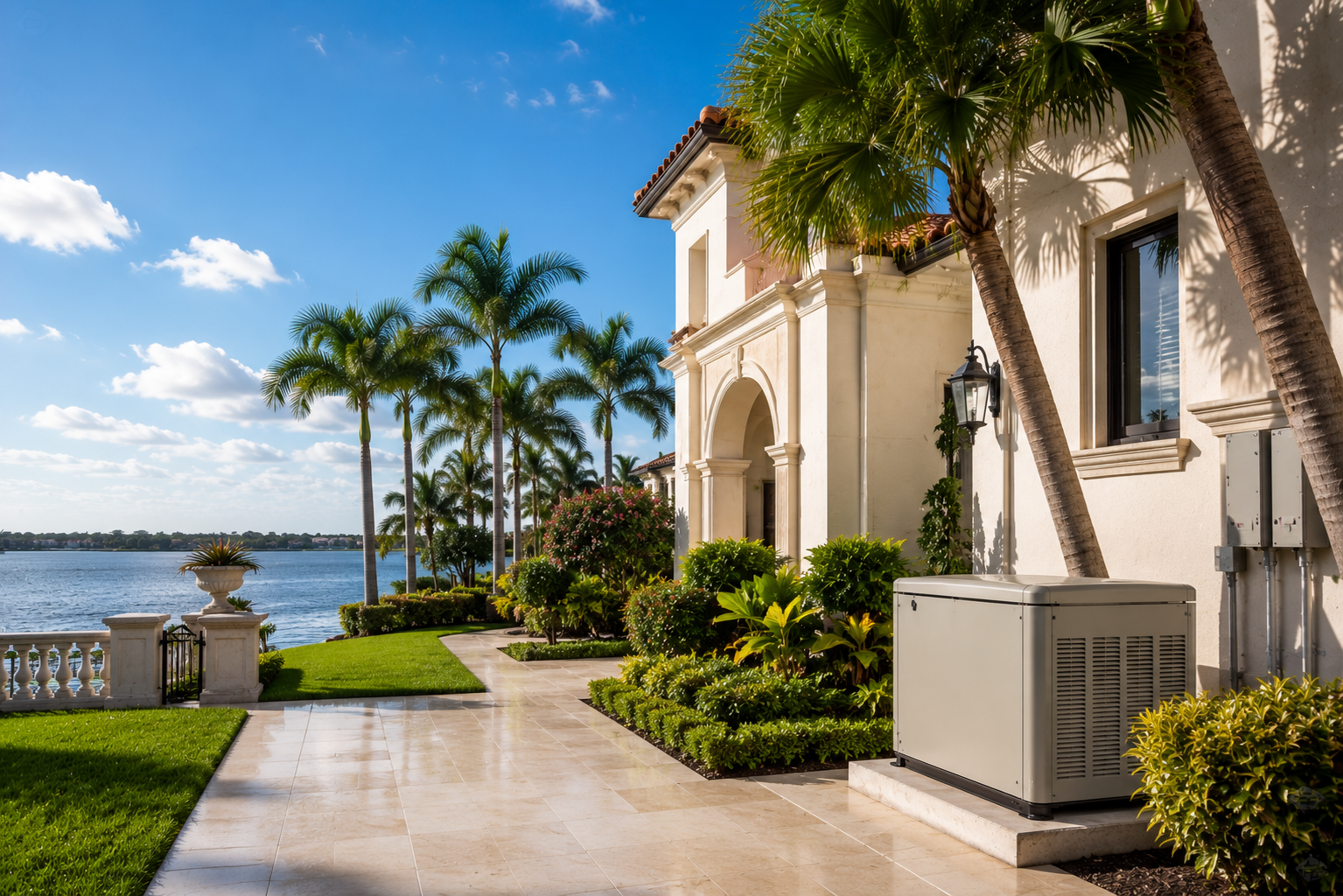
Generator installation costs in Palm Beach can vary based on generator size, fuel source, electrical requirements, and local permitting considerations. Learn what influences pricing and what to expect when budgeting for a professionally installed backup power system.
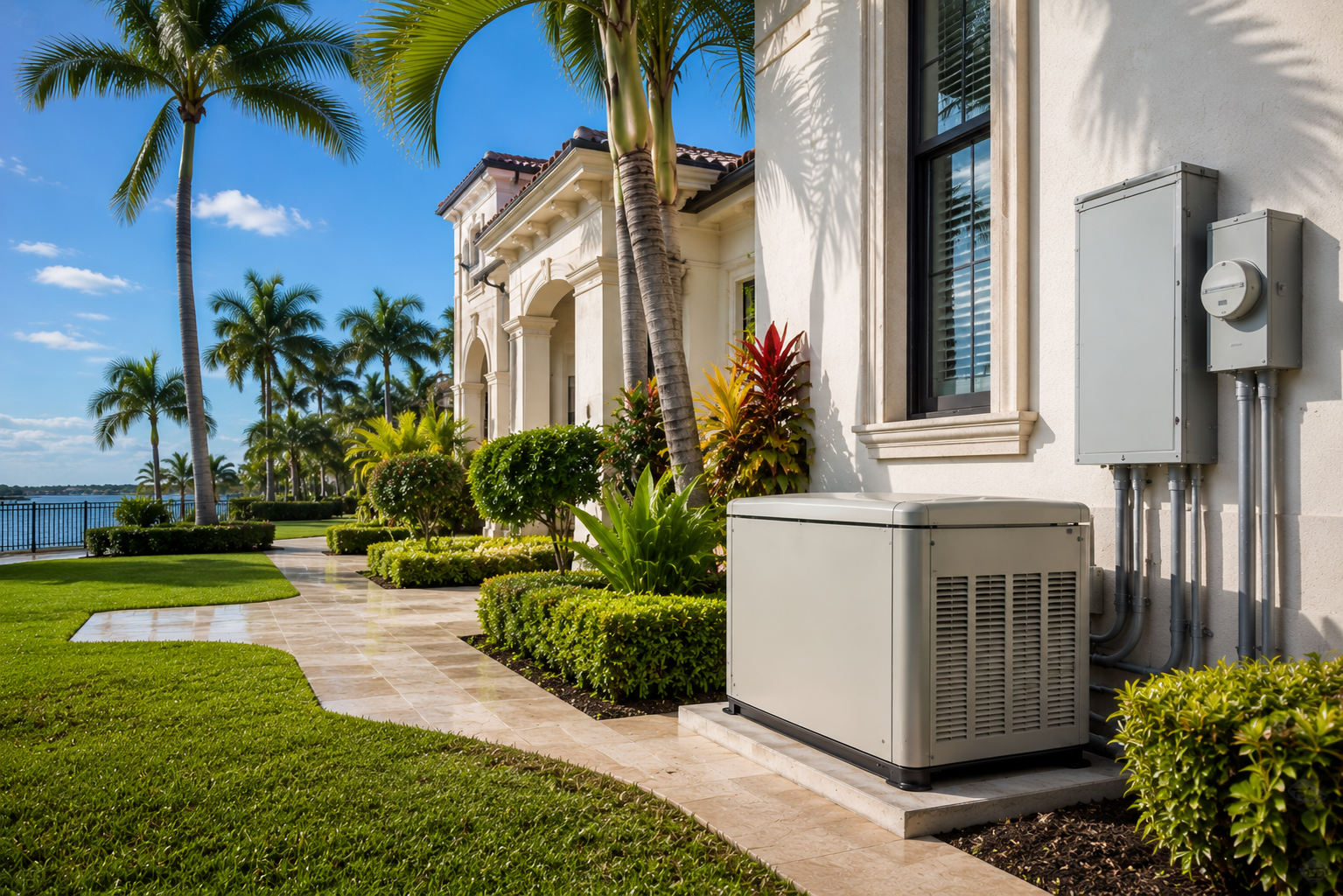
From generator sizing and site evaluation to permitting, installation, and final testing, several important steps influence the success of a backup power project. Learn what Palm Beach homeowners can expect throughout the installation process.
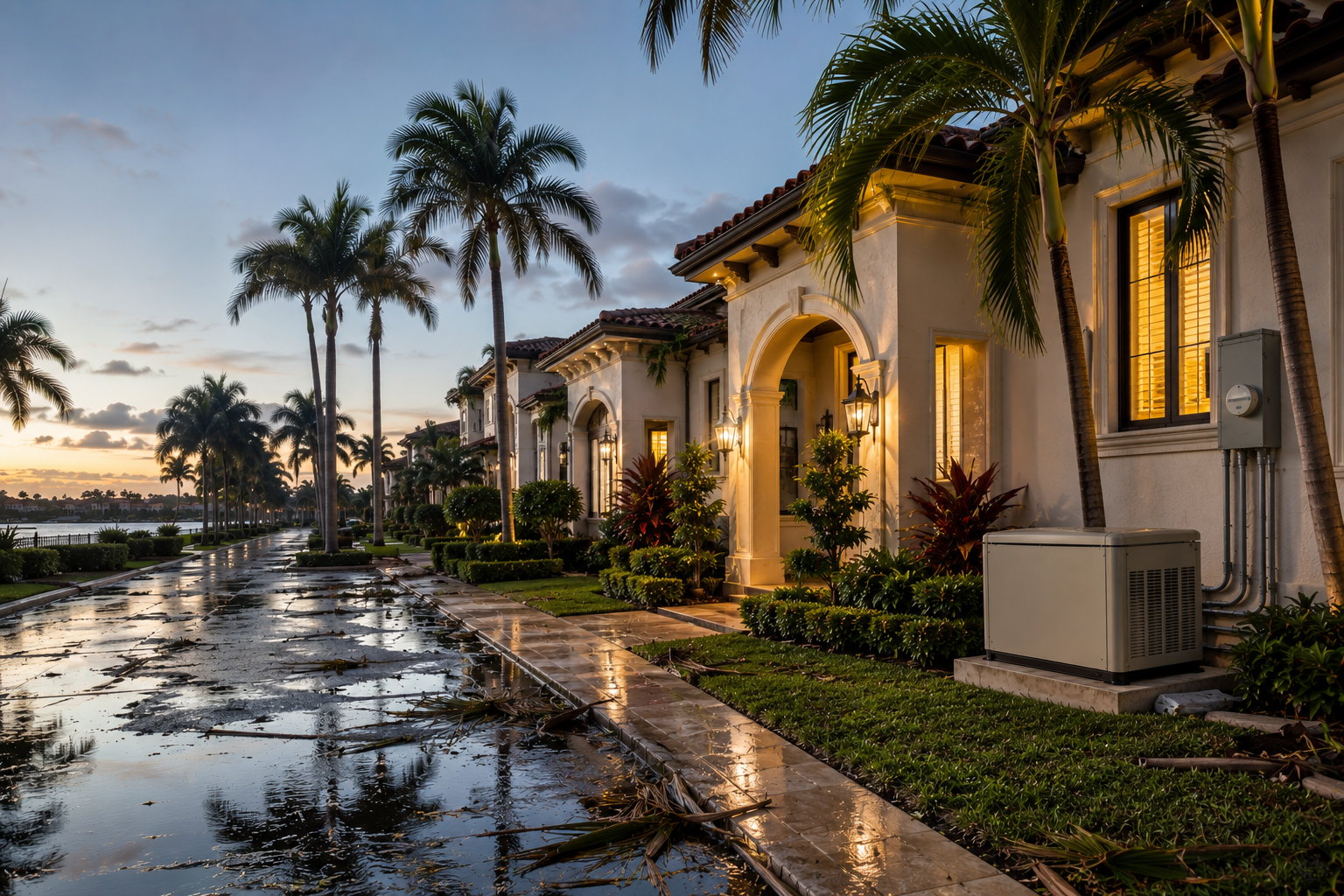
Hurricanes, tropical storms, and utility interruptions can leave Palm Beach homes without power for hours or even days. Explore how emergency power solutions help protect comfort, security, and essential household systems during outages.
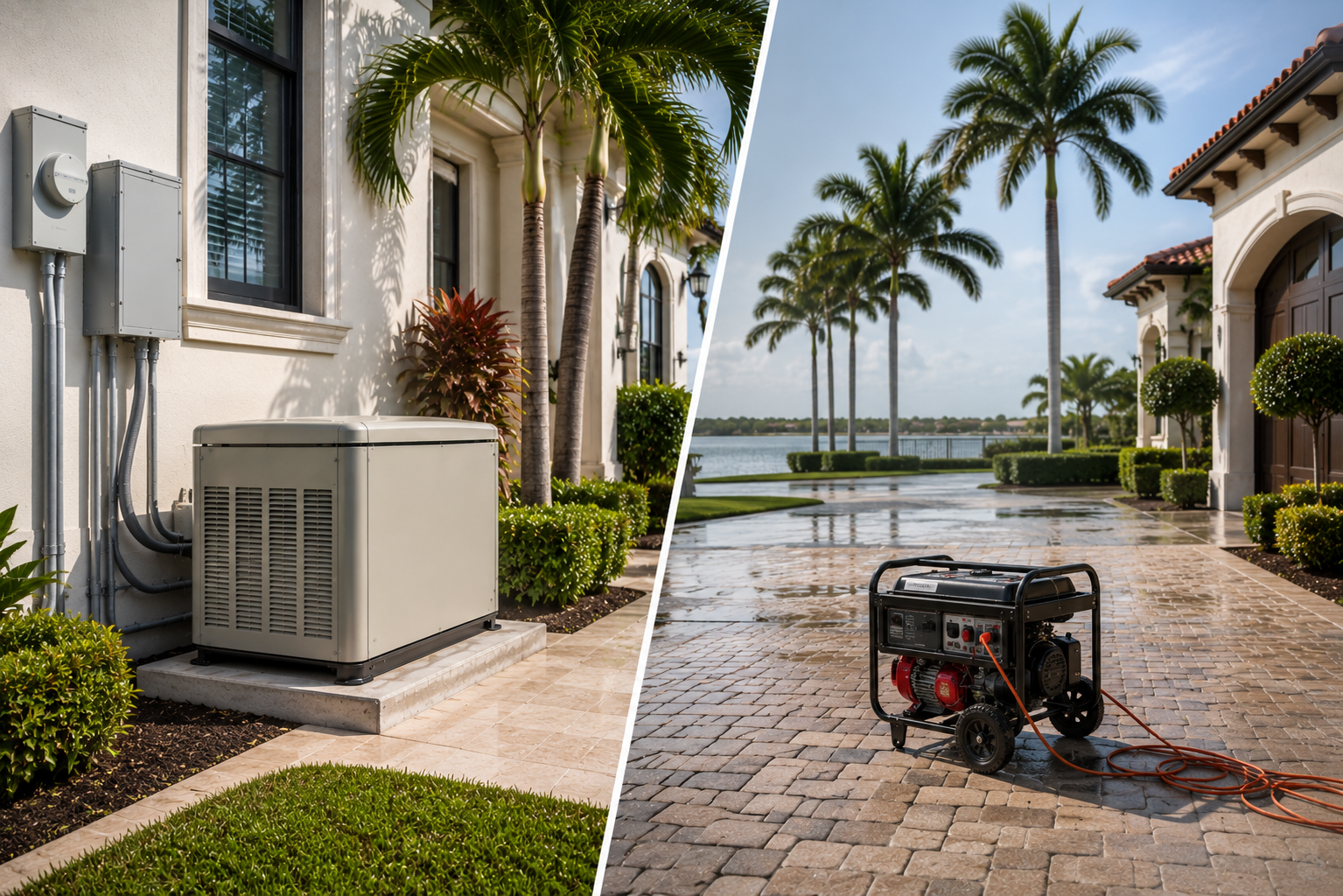
Not all backup power systems offer the same level of convenience and protection. Compare standby generators and portable generators to determine which solution best fits your Palm Beach property's needs and preparedness goals.
Request a Standby Generator Installation Estimate in Palm Beach County
If you're considering standby generator installation in Palm Beach, requesting an estimate is the best way to explore available options and understand expected costs.
Providing information about your property, backup power goals, electrical requirements, and desired timeline can help ensure a more accurate consultation and estimate.
Call now or submit a request to get connected with a qualified local professional.
Request an Estimate
We will get back to you as soon as possible.
Please try again later.
Standby Generator Installation FAQs for Palm Beach County Properties
How is a standby generator sized?
A standby generator is typically sized based on the electrical loads the homeowner wants to maintain during an outage rather than home size alone. Air conditioning, refrigeration, lighting, security systems, appliances, medical equipment, pumps, gates, and other essential loads may all affect the required capacity. A proper load evaluation helps determine whether an essential-load or broader whole-home system is more appropriate.
Is natural gas or propane better for a standby generator?
Both natural gas and propane can be suitable fuel sources, depending on the property. Natural gas can provide a continuous fuel supply where utility service is available, while propane can be stored on-site and may be a practical option where natural gas is unavailable. Generator capacity, expected runtime, fuel availability, tank requirements, property layout, and installation cost should all be considered when comparing the two.
What does an automatic transfer switch do?
An automatic transfer switch monitors the property's utility power and automatically transfers selected electrical loads to the standby generator when an outage occurs. Once utility power is restored, the transfer switch returns the property to normal utility service and allows the generator to shut down. This automatic operation is one of the main differences between a permanently installed standby generator and a portable generator.
How long does standby generator installation typically take?
The physical installation may be completed relatively quickly once the equipment, permits, fuel connections, and electrical requirements are ready, but the overall project timeline can vary considerably. Generator availability, site preparation, permitting, HOA approvals, utility coordination, natural-gas or propane work, electrical upgrades, inspections, and installer scheduling can all affect how long the complete process takes.
Can flood zones, HOA requirements, or property conditions affect generator placement?
Yes. Generator placement may be influenced by drainage, grade, flood-related conditions, available installation space, setbacks, landscaping, electrical-panel location, fuel connections, access for maintenance, and proximity to the home or neighboring properties. HOA-managed, gated, waterfront, and other properties may also have additional requirements concerning equipment location, screening, appearance, or approval.
What permits or inspections may be required for standby generator installation?
Standby generator projects may require electrical, mechanical, building, gas, or other permits and inspections depending on the property, fuel source, installation scope, and local jurisdiction. Utility coordination or HOA approval may also be necessary in some situations. Requirements can vary across Palm Beach County municipalities, so the specific property and project should be reviewed before installation begins.